Architecture
Nepean Hospital Redevelopment delivers accessible healthcare services and an integrated community wellbeing hub.
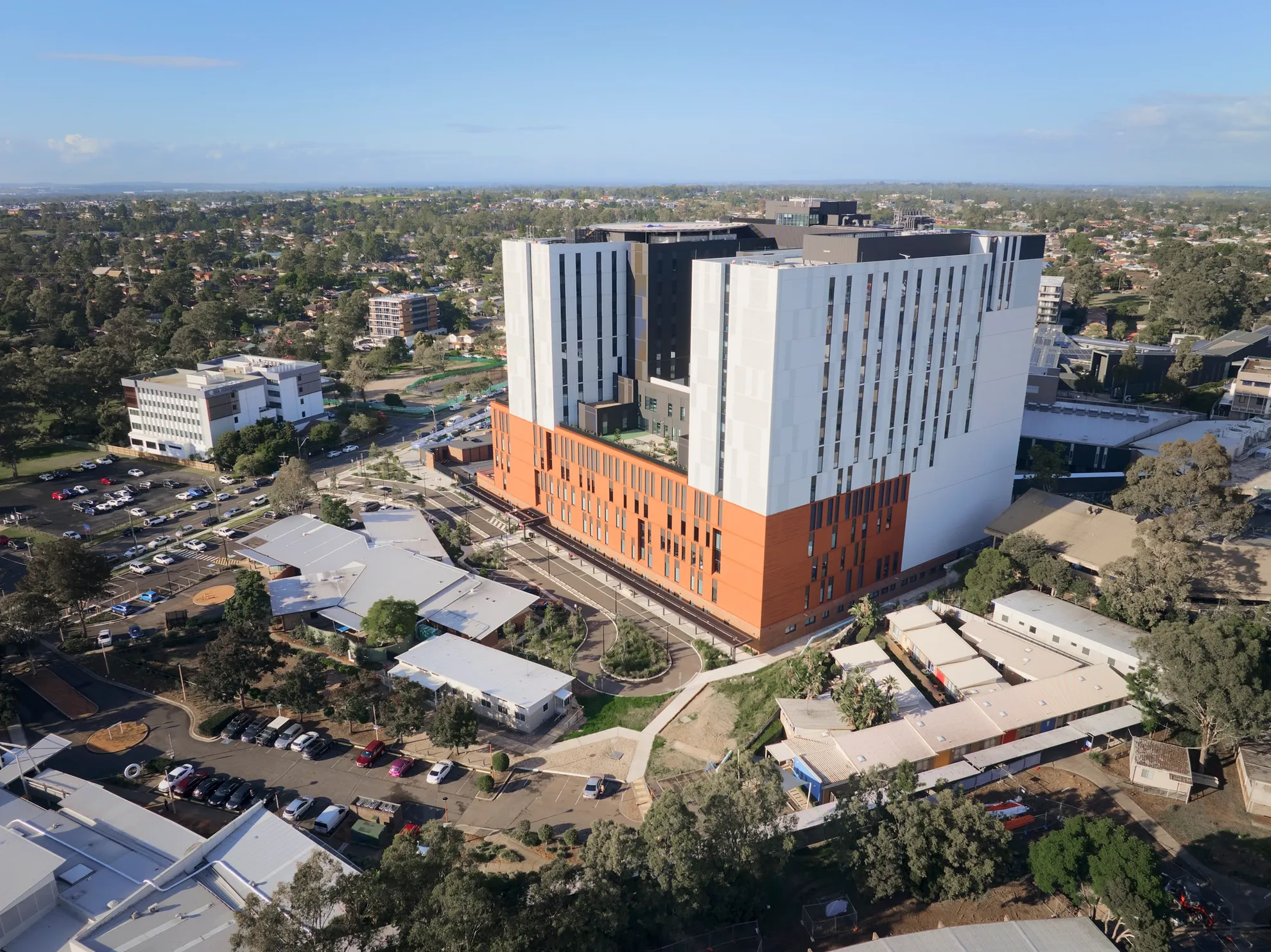
Nepean Hospital is located within the City of Penrith on the traditional lands of the Darug nation at the edge of Greater Western Sydney. Since it was established on the Kingswood campus in 1956, it has transformed along with the growing region. The original 100-bed community hospital has become a major referral and teaching hospital with a complete range of tertiary-level facilities to serve its diverse multicultural community.
Planning began in 2010 with the vision that the redeveloped hospital would be a catalyst for investment in a hub that would offer education and research opportunities, generate employment and economic prosperity, and lead to improved health outcomes.
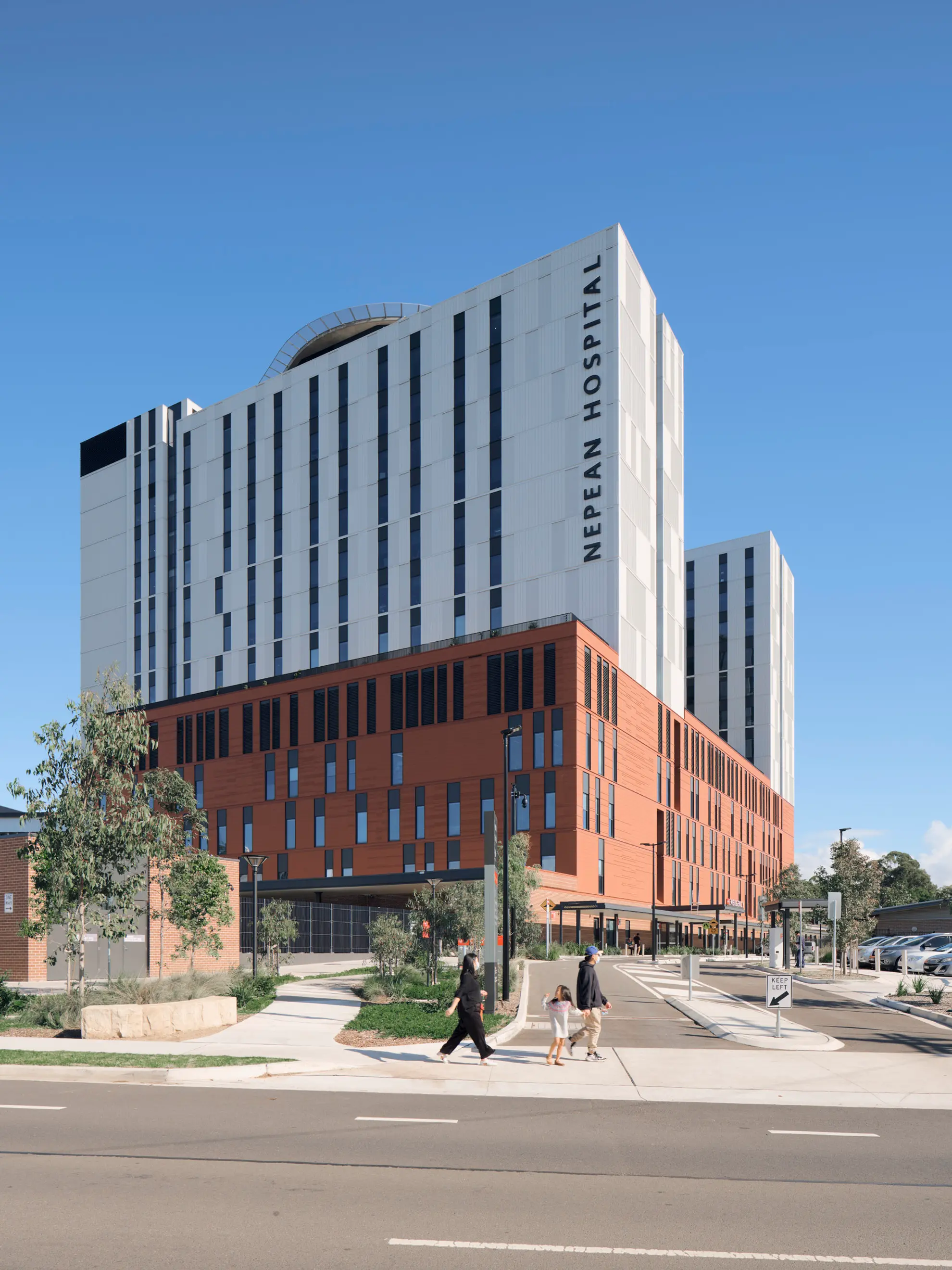
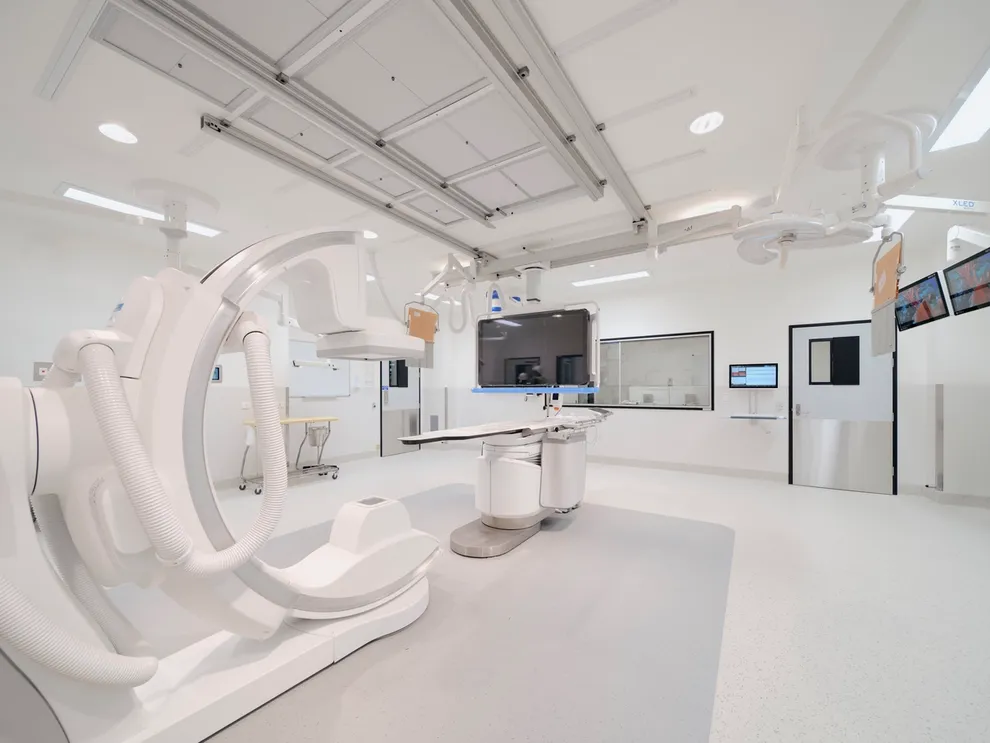
Stage One (2022): 14-storey hospital, 200+ beds, expanded ED, 16 theatres, 18 birthing suites, NICU, cardiology, helipad and expanded community/cancer care.
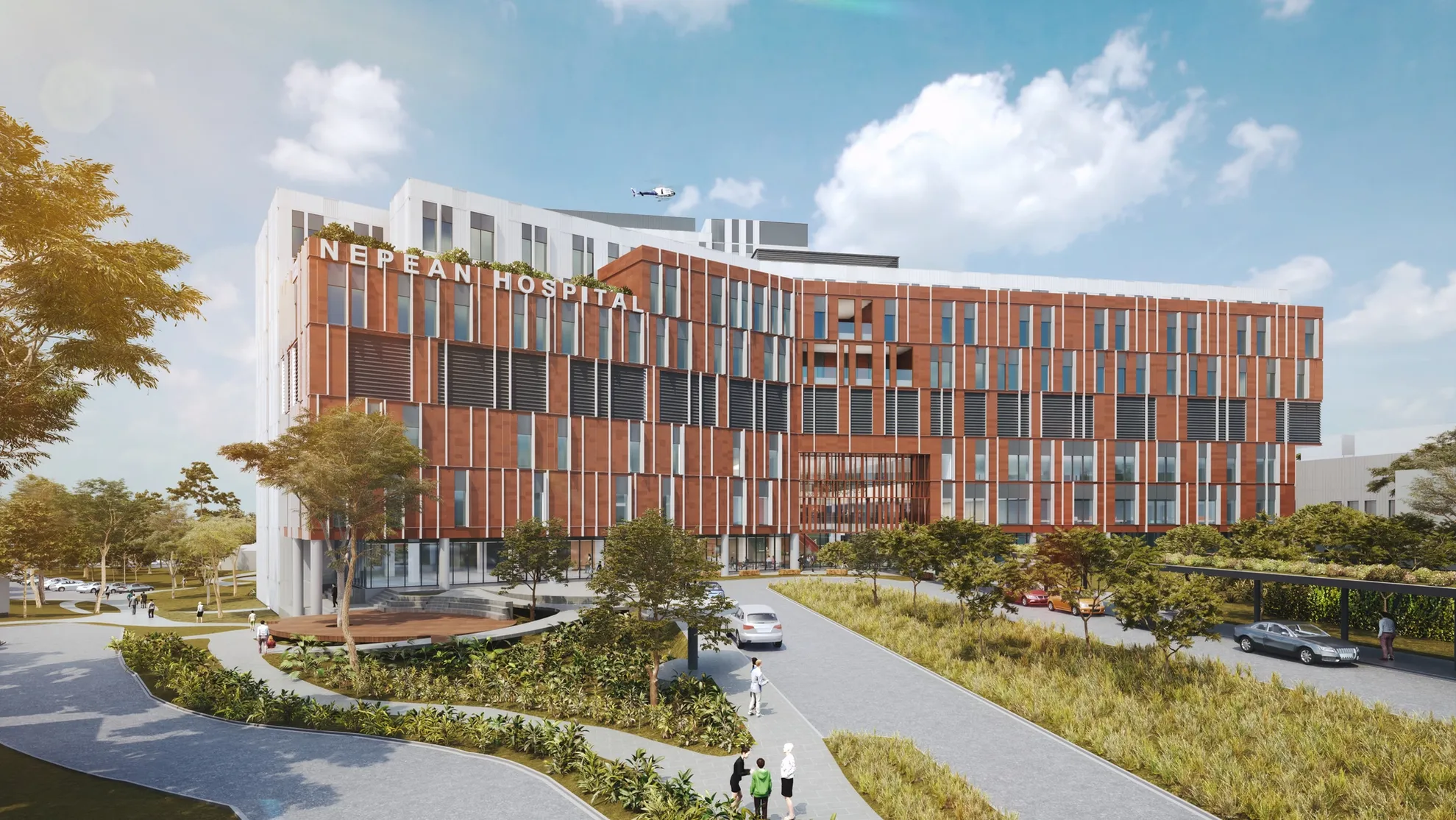
Stage Two (late 2026): New 7-storey clinical building with ICU, imaging, dialysis, expanded inpatient care, staff facilities, a new main entry and community health centre.
The hospital’s evolution over time had resulted in a dense amalgamation of low-rise buildings, multiple entry points, difficult wayfinding and inefficient hospital operations. This disjointed complex was obstructing change and new models of care.
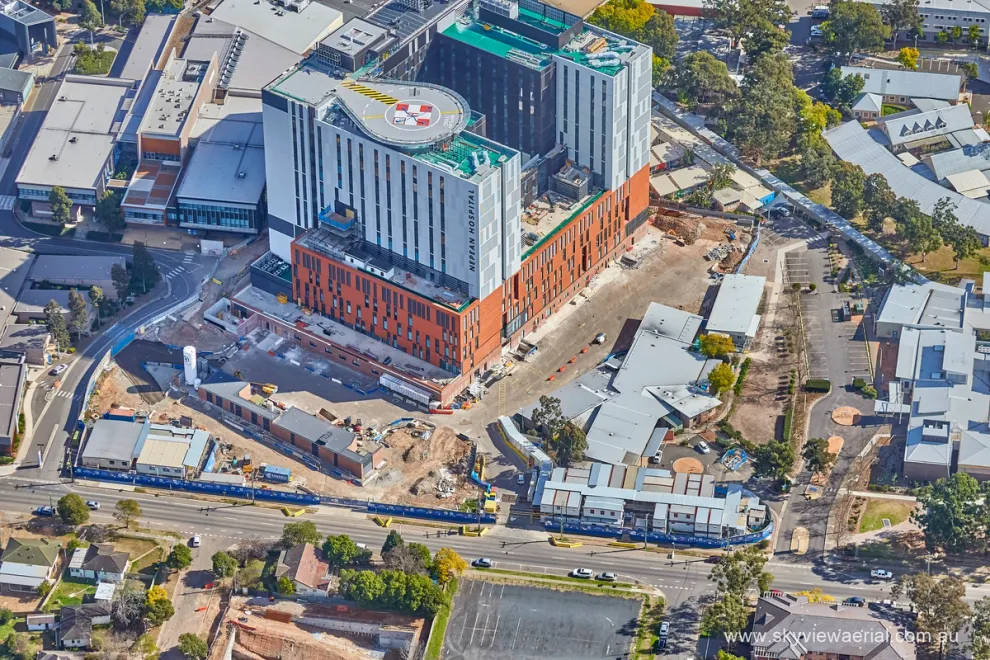
BVN’s master plan reconfigured the campus, establishing functional precincts, new vehicle entry points, pedestrian links, multi-storey car parking and space for expansion. Through this, the hospital could be consolidated and refurbished, with essential clinical adjacencies established.
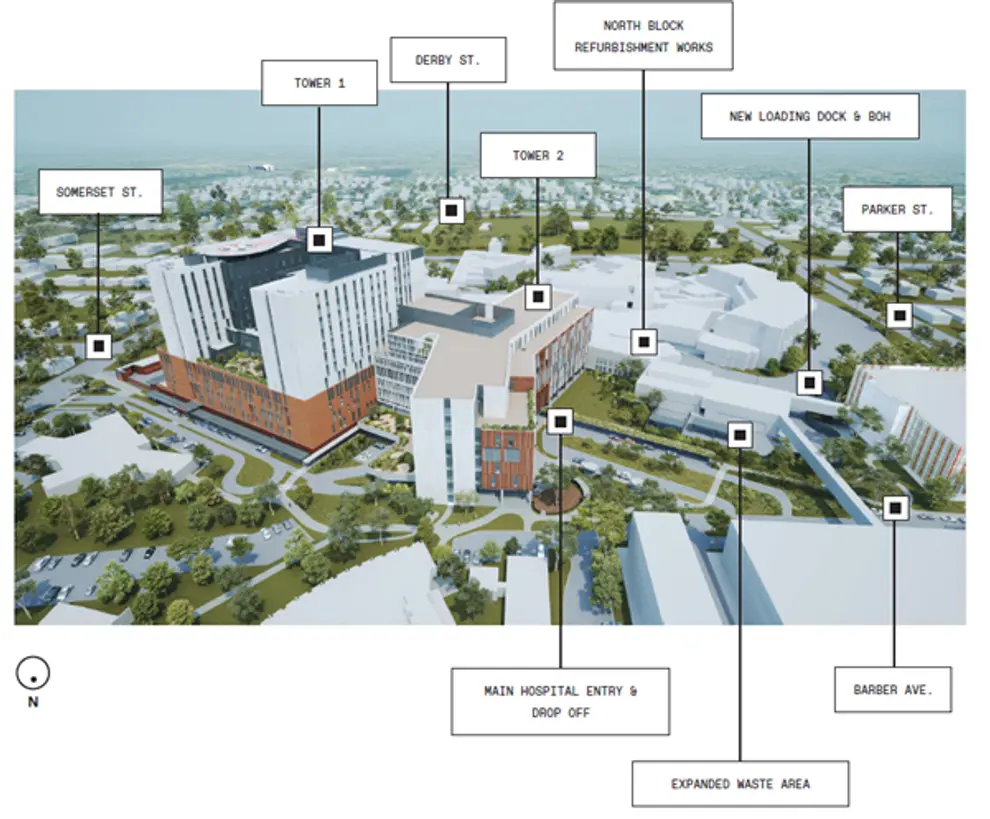
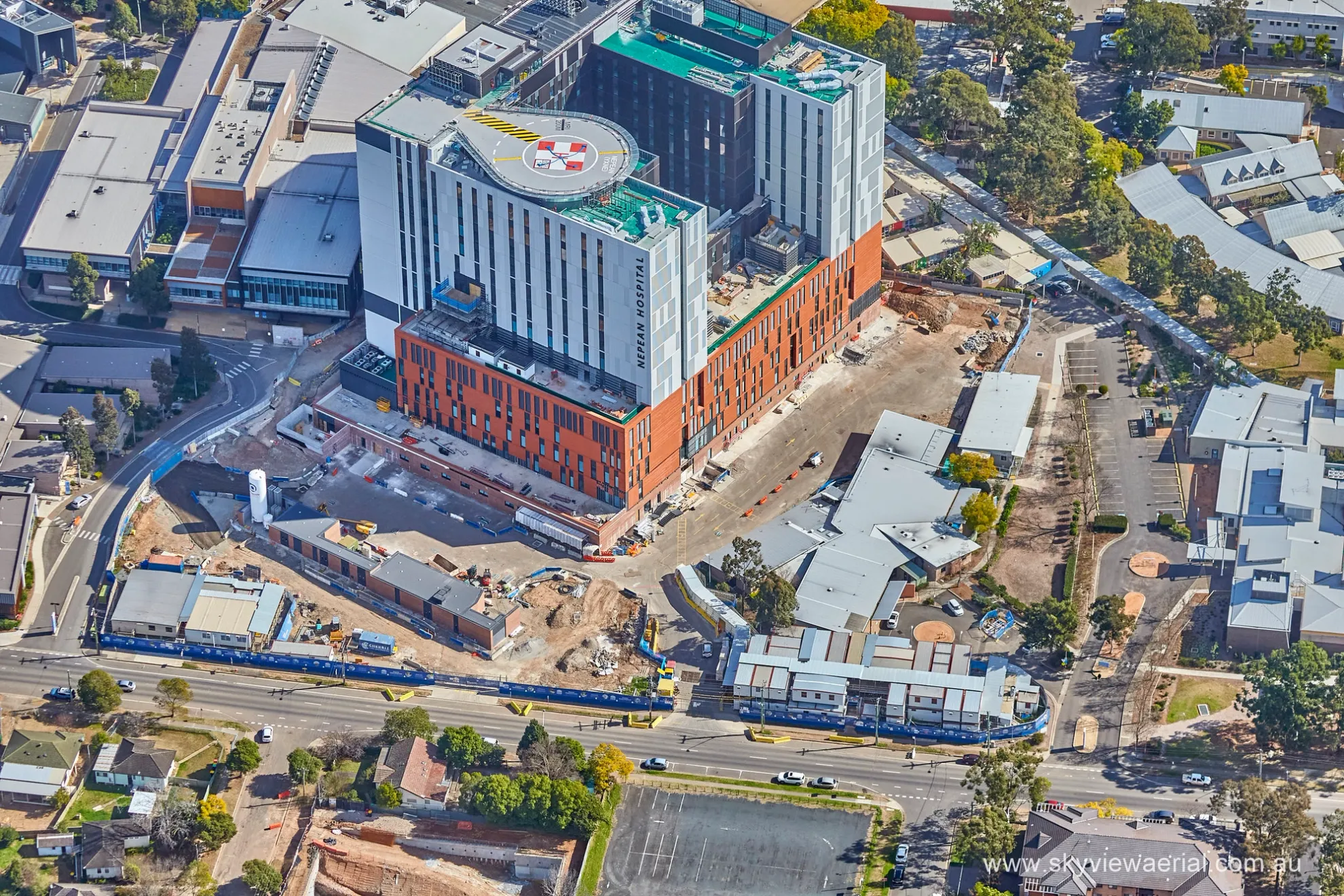
This decade-long project was constructed in two stages. The 14-storey first stage established a compact core of medical services, replacing the majority of acute hospital departments and inpatient wards. The seven-storey second stage provides a new main entrance and the balance of replacement facilities. The two buildings are a tribute to careful masterplanning, working together to rationalise the hospital whilst minimising demolition and enabling operations to continue uninterrupted.
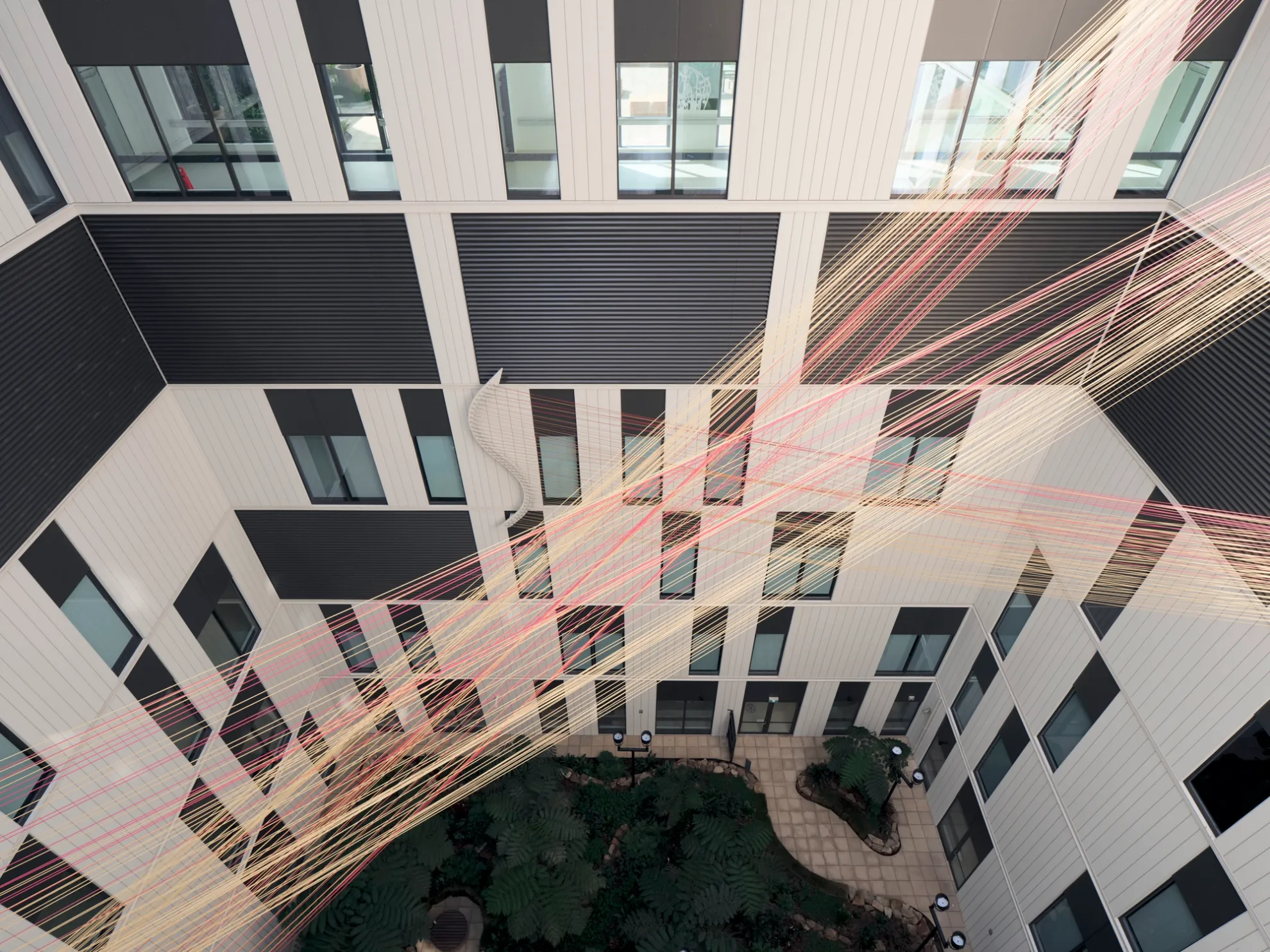
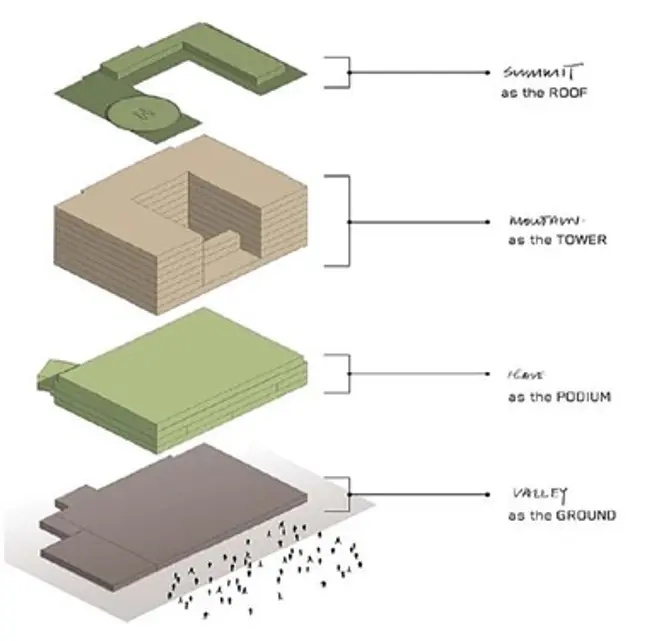
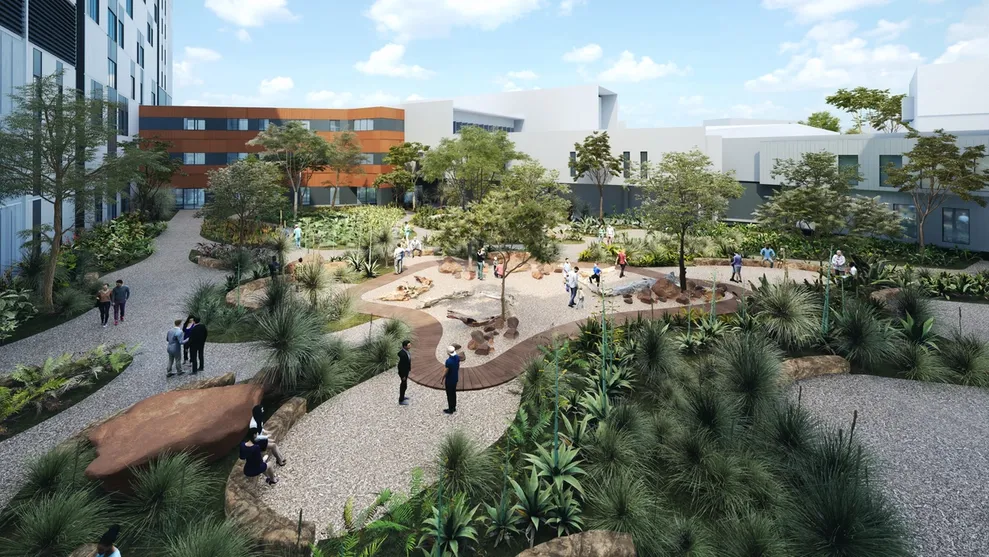
The Stage One building is configured as a five-storey square podium below an eight-storey u-shaped tower. Primarily driven by the size and shape of clinical functions, the plan mirrors either side of a central core, which combined with the typical 8.4m structural grid, maximises flexibility and minimises travel distances. Tested on other BVN-designed hospitals, this footprint has consistently proved adaptable to change. Stage Two adopts a different floorplate, with a splayed rectangle embracing the new main entrance, aligning with cross-campus connections and creating a generous northern courtyard between the two buildings.
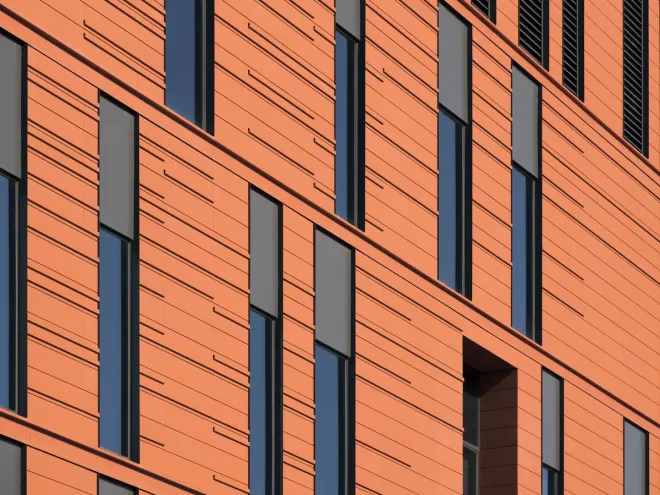
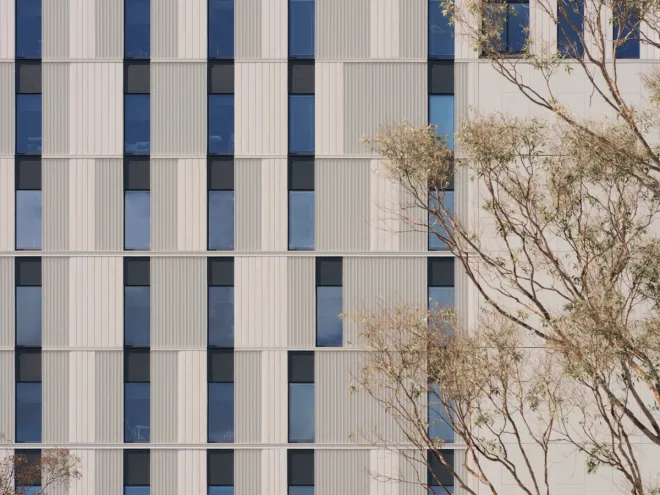
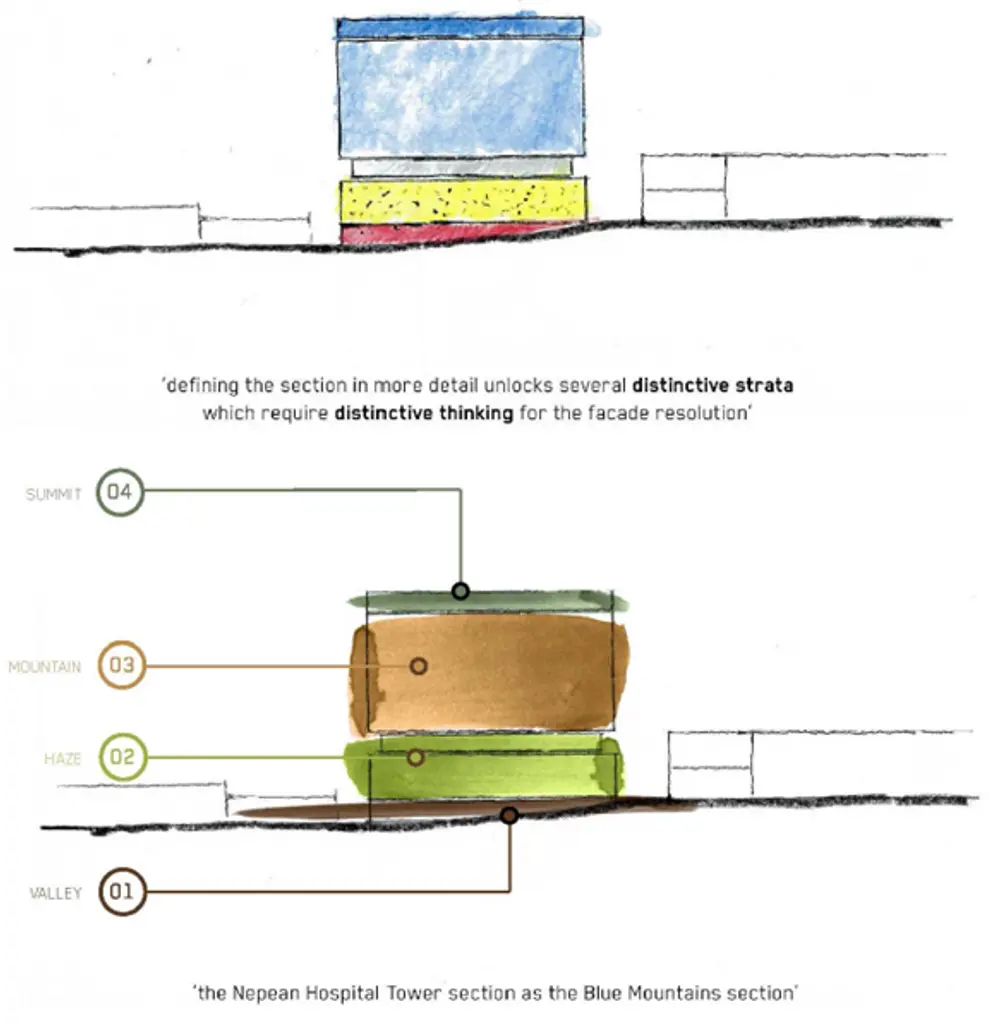
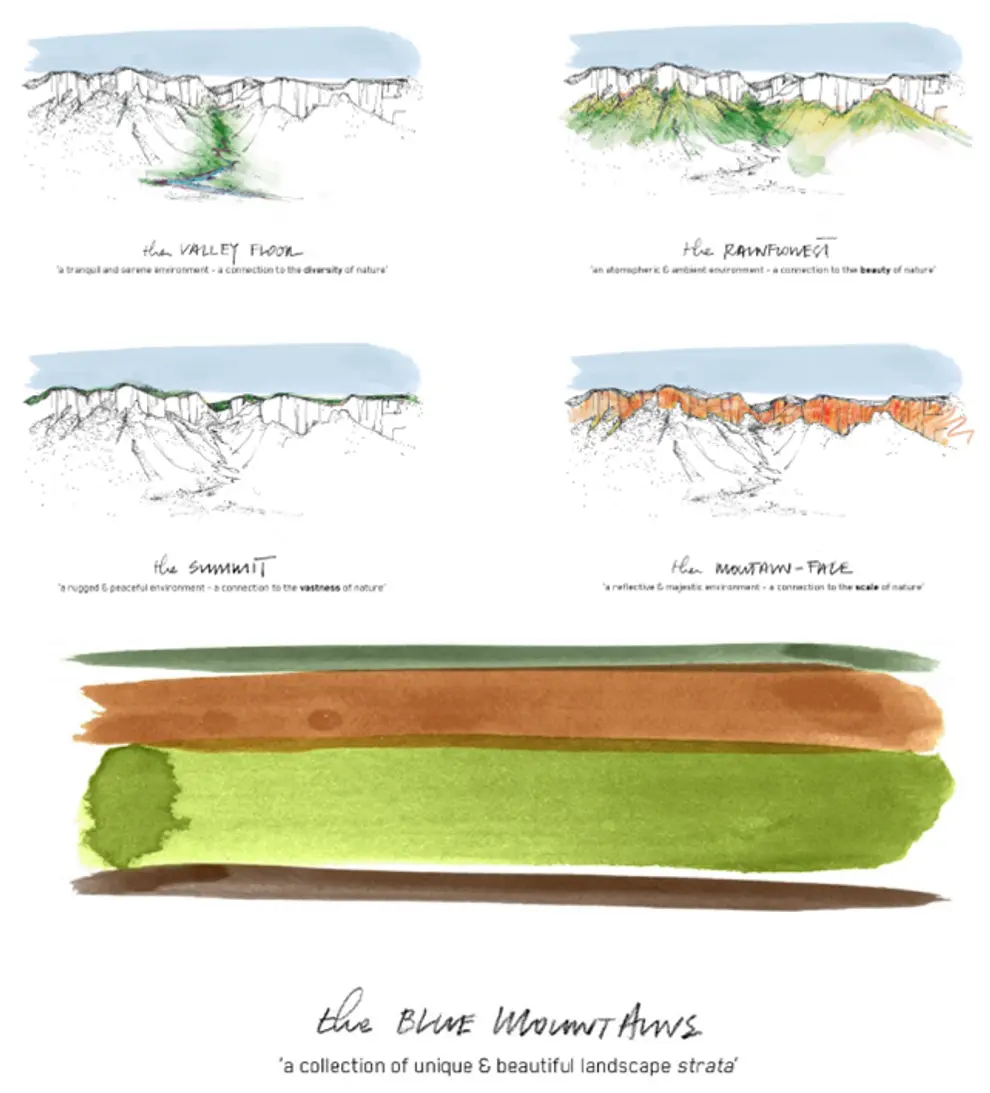
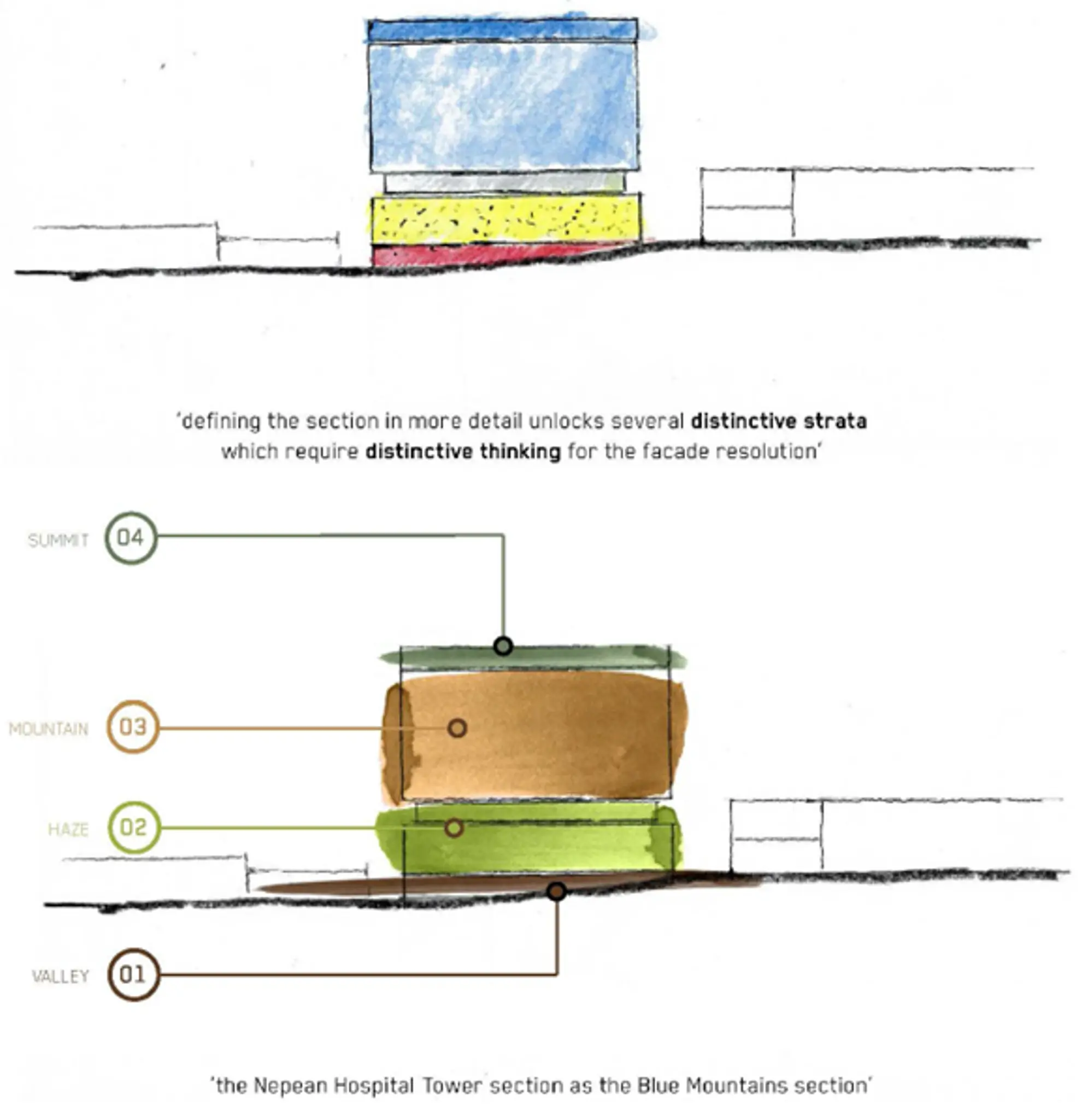
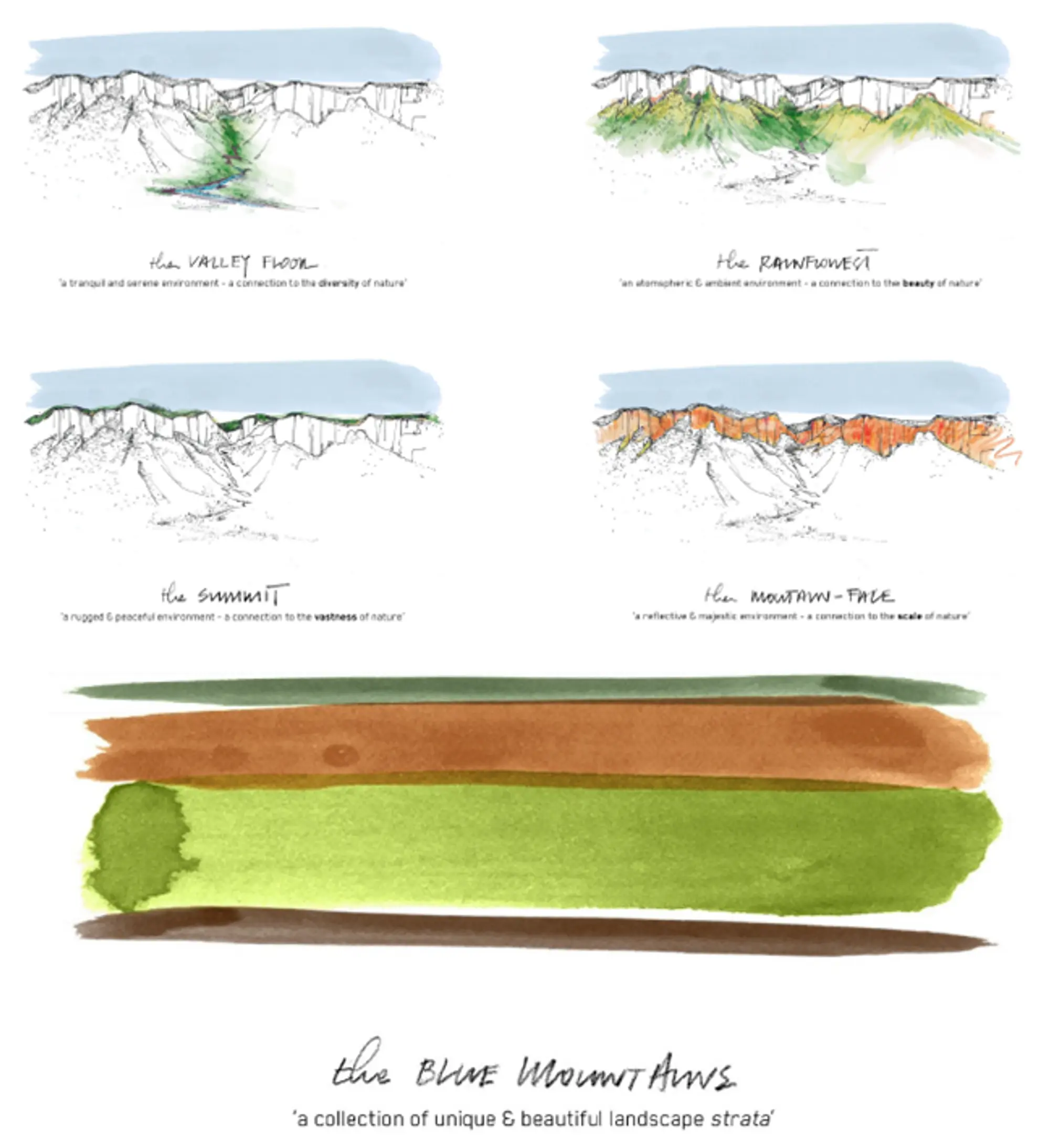
BVN has taken inspiration from the nearby Blue Mountains, with the layered façade an architectural interpretation of the valleys, forests, rugged cliffs and blue haze of Sydney’s treasured backdrop. Translated into datums 


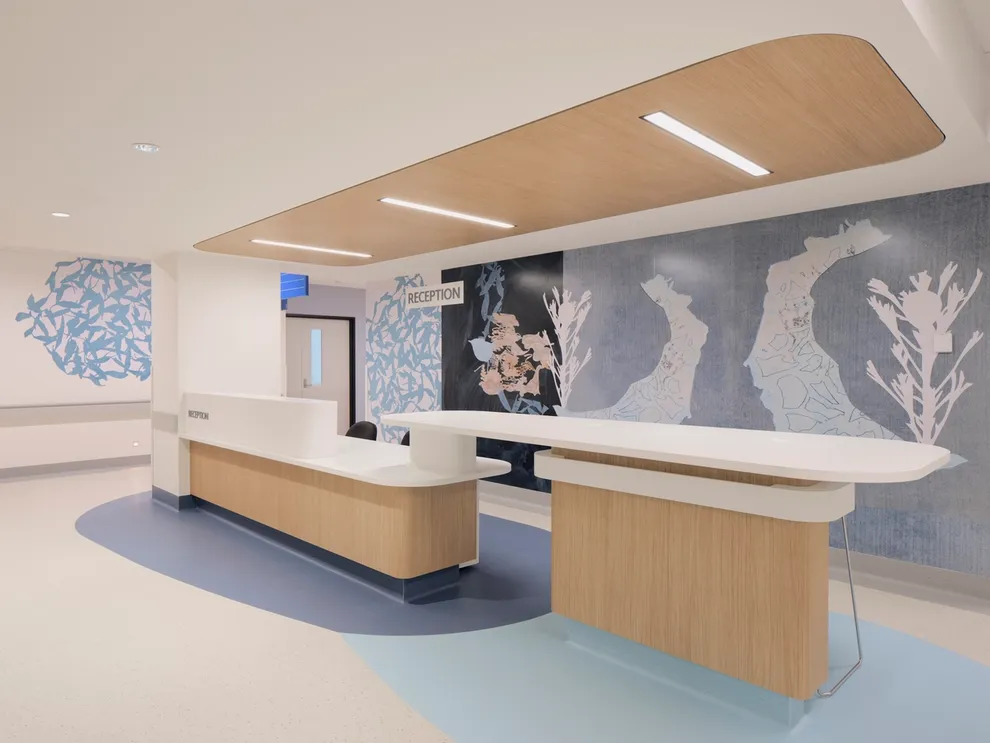
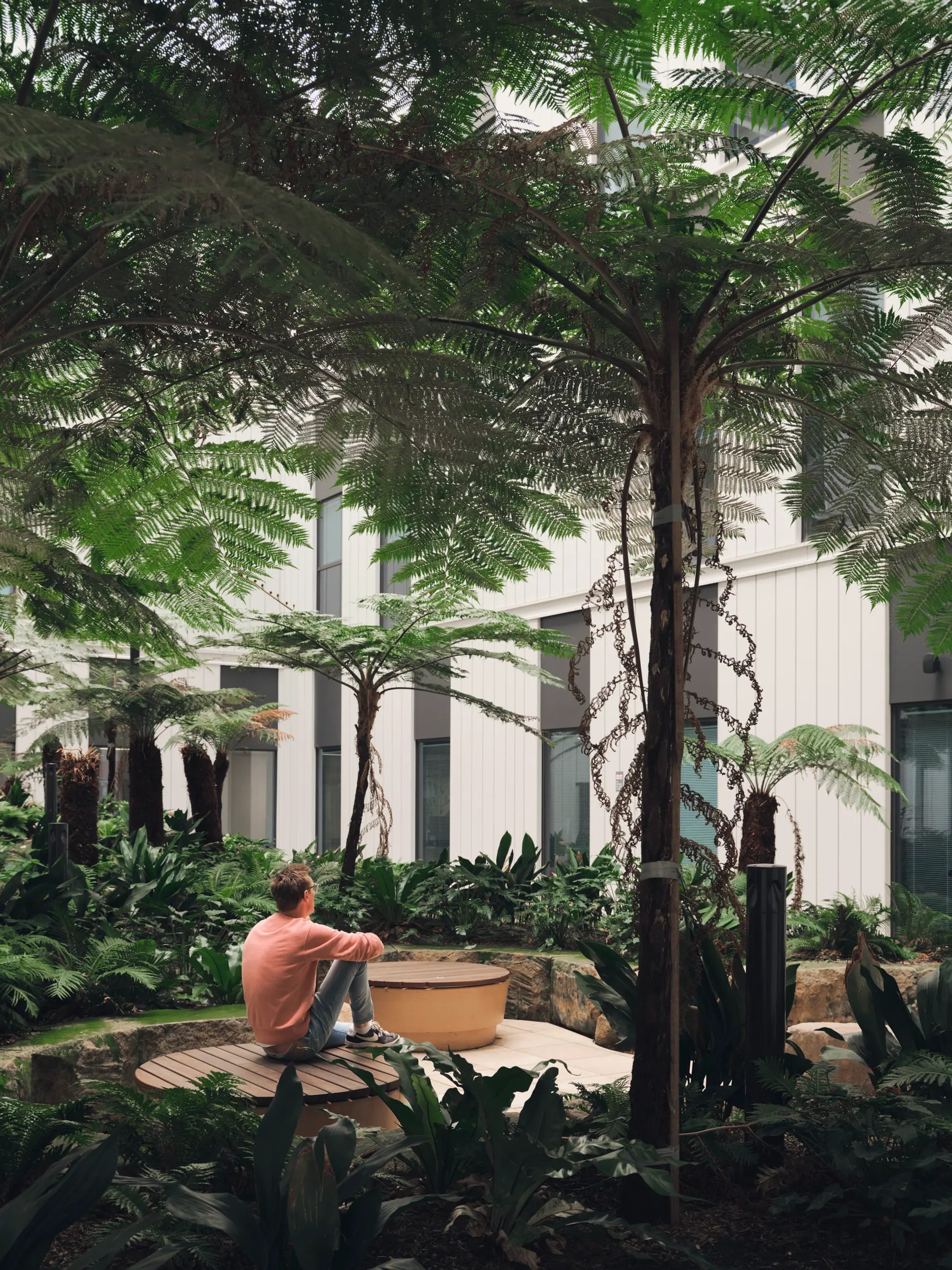
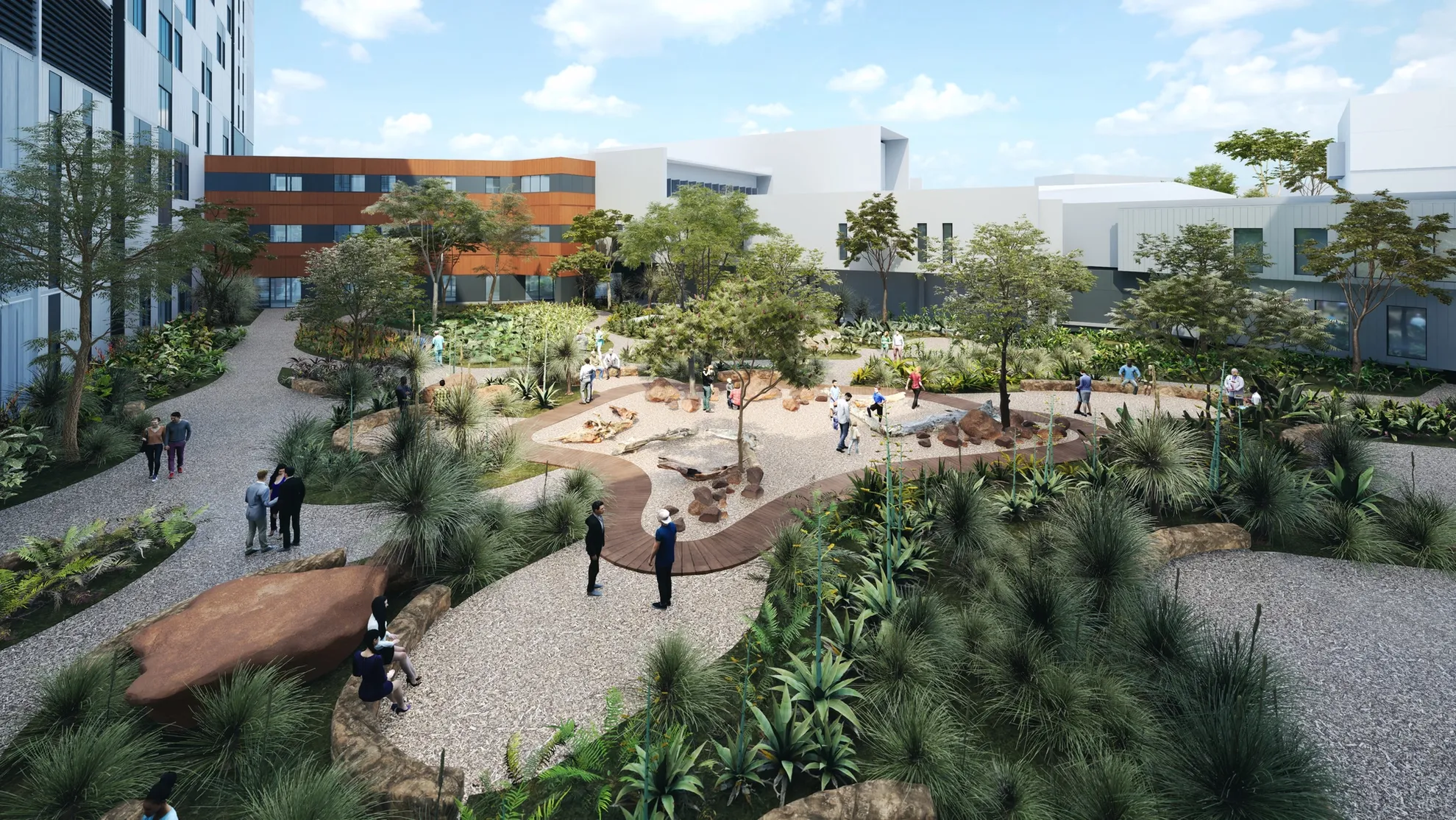
Much attention has been paid to edges and surrounds, with colonnades, courtyards and meandering pathways making access unambiguous and inviting. These culminate in a generous entry atrium that provides the sense of grandeur that acknowledges the significance of this investment in the evolution of Greater Western Sydney.
The Process
Credits
BVN
Collaborators
Health Infrastructure
Consultants
Stage One: Urbanite, Meinhardt Group, Bonacci Group, Blackett Maguire + Goldsmith, Arup, Arcadia Landscape Architecture, Steensen Varming (Australia), Warren Smith & Partners, SCLSPEC, Surface Design, Avi Pro, Parking and Traffic Consultants
Collaborators
Health Infrastructure
Consultants
Stage One: Urbanite, Meinhardt Group, Bonacci Group, Blackett Maguire + Goldsmith, Arup, Arcadia Landscape Architecture, Steensen Varming (Australia), Warren Smith & Partners, SCLSPEC, Surface Design, Avi Pro, Parking and Traffic Consultants
Photography
Martin Siegner
Video
Martin Siegner