Architecture, Interiors
A welcoming and flexible research environment, the Lang Walker AO Medical Research Building (LWMRB) will improve health outcomes for South Western Sydney and beyond.
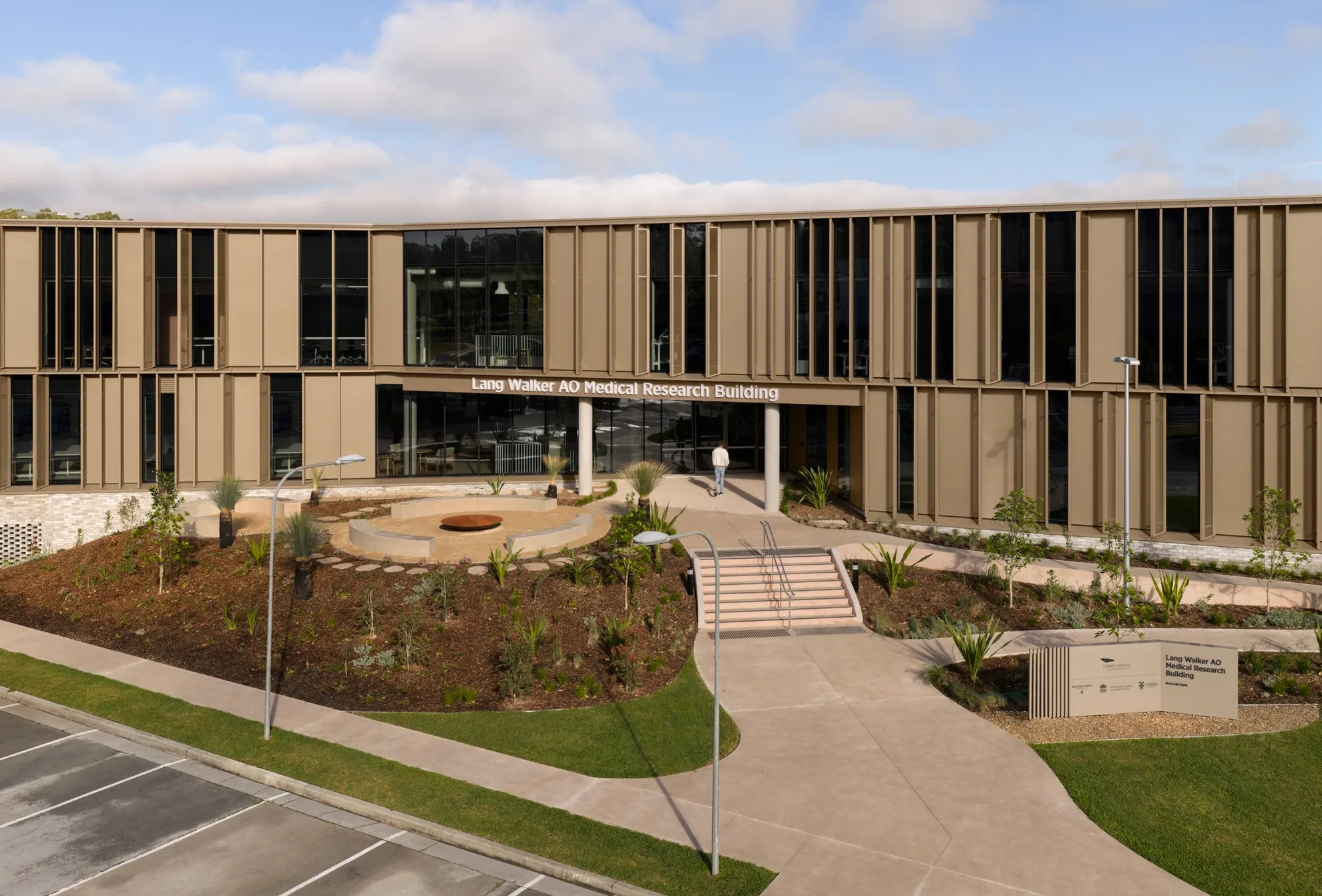
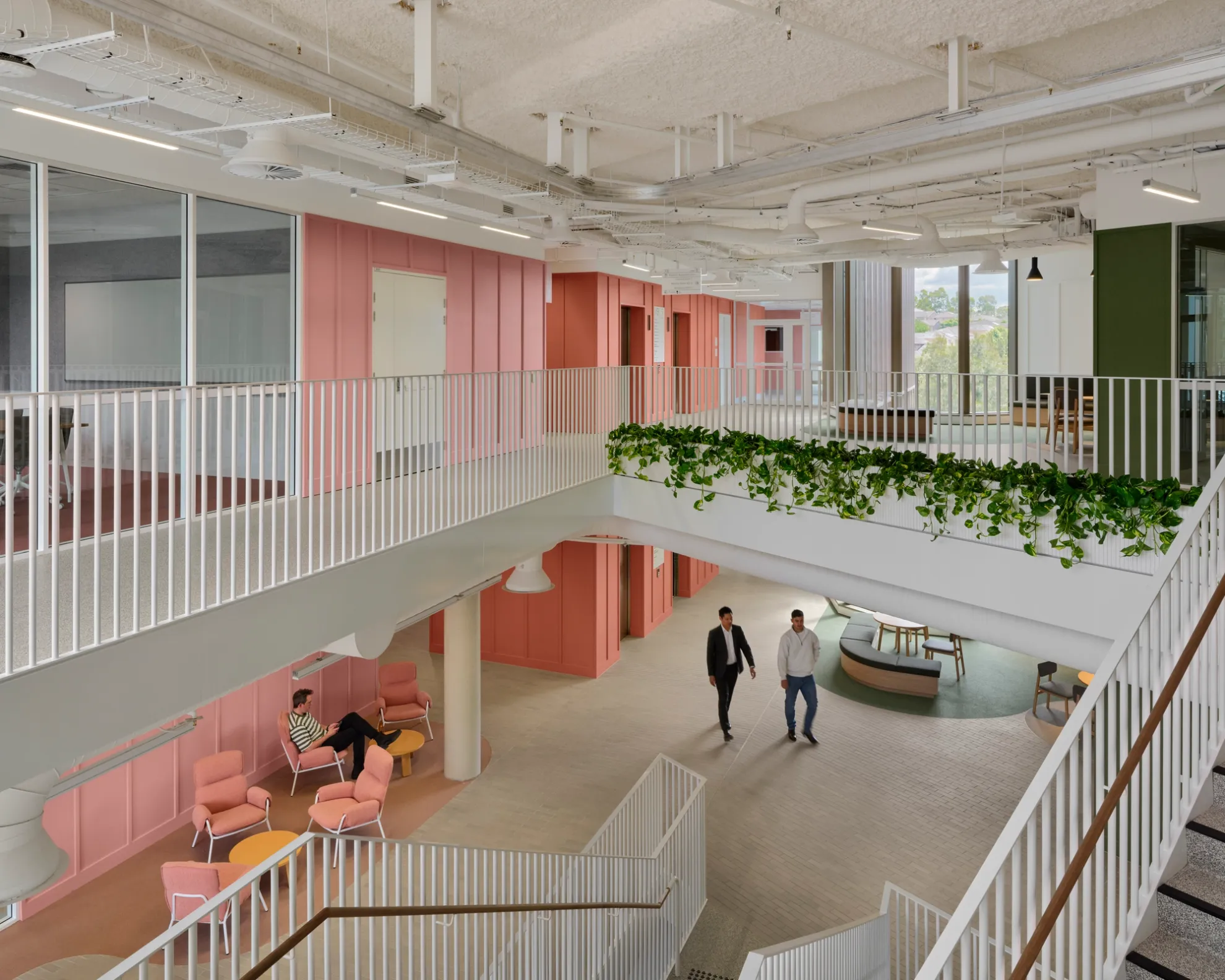
The new Lang Walker AO Medical Research Building (LWMRB) will provide a platform for four organisations to partner on the Campbelltown Hospital Campus — Western Sydney University, South Western Sydney Local Health District, Ingham Institute for Applied Medical Research and University of New South Wales. With financial support from the Walker Corporation, each one can bring its expertise and resources to bear on five areas of research - diabetes, mental health, indigenous health, paediatrics & child wellbeing and addiction medicine, focussing on commonalities specific to South Western Sydney.
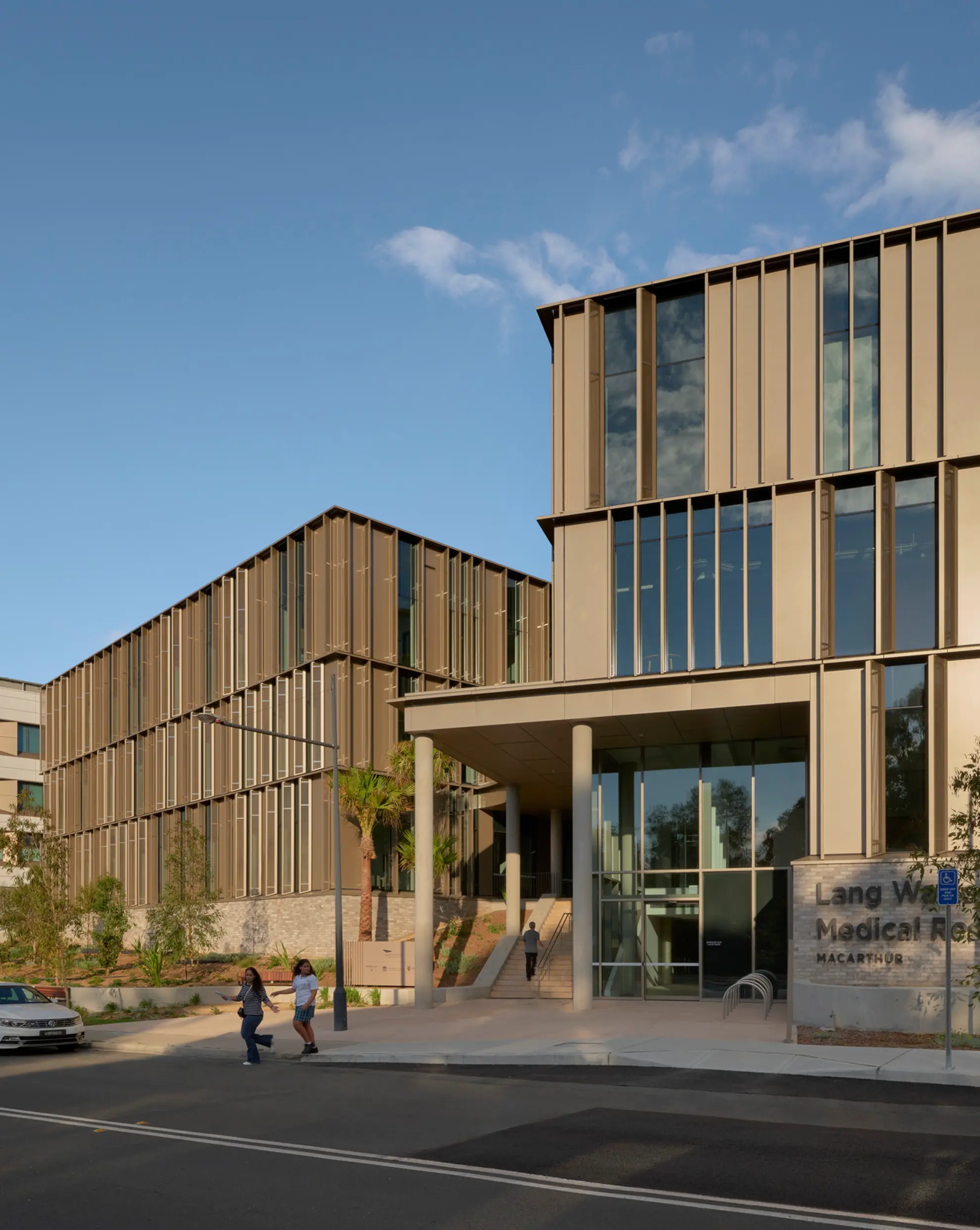
Located on Darug, Dharawal and Gundungurra Country, the communities in the South Western Sydney Local Health District (LHD) are socially, economically, culturally and linguistically diverse. This rapidly growing region contains significant pockets of disadvantaged and vulnerable people with difficulties arising from their circumstances that lead to poor health outcomes.
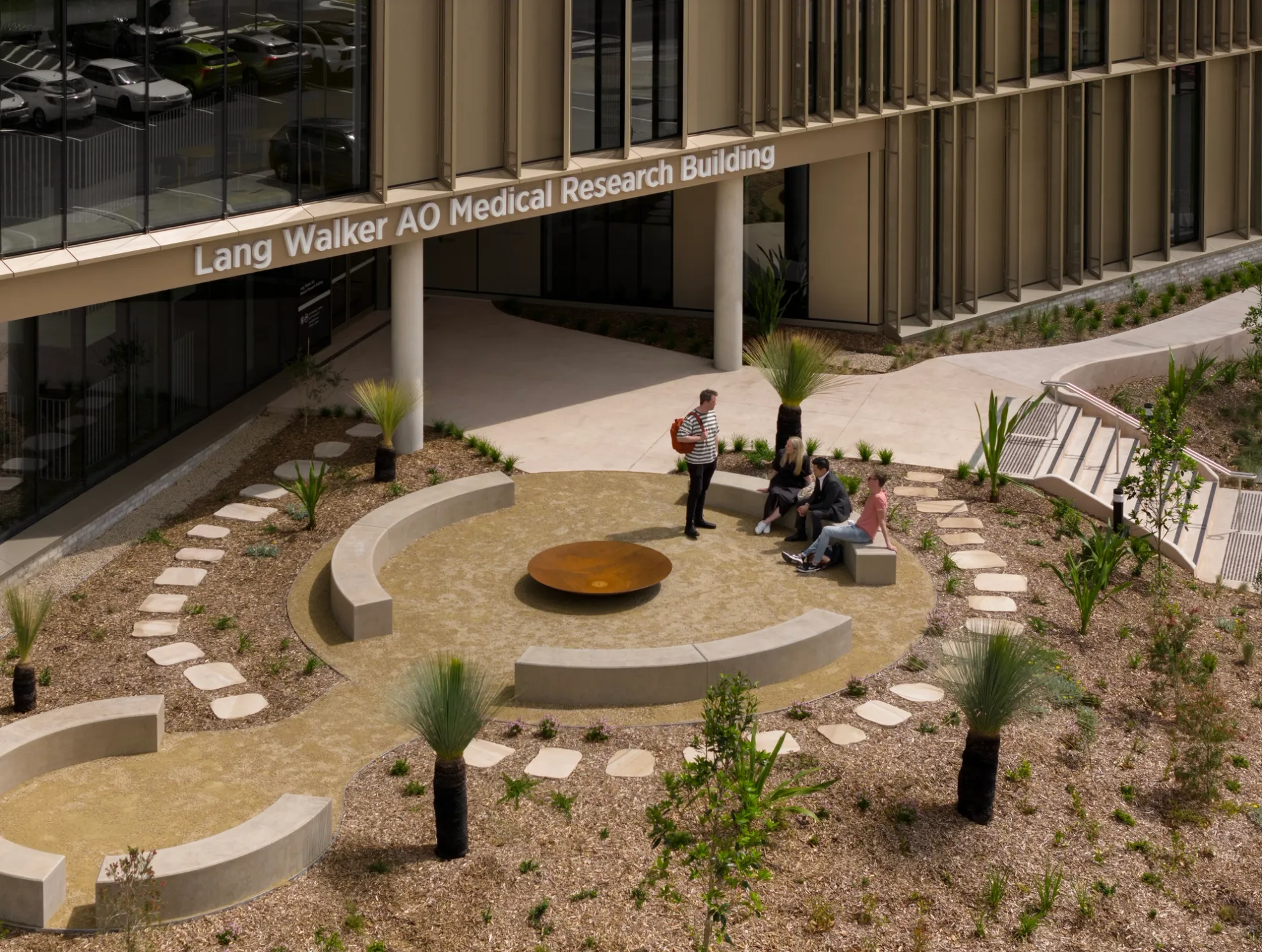
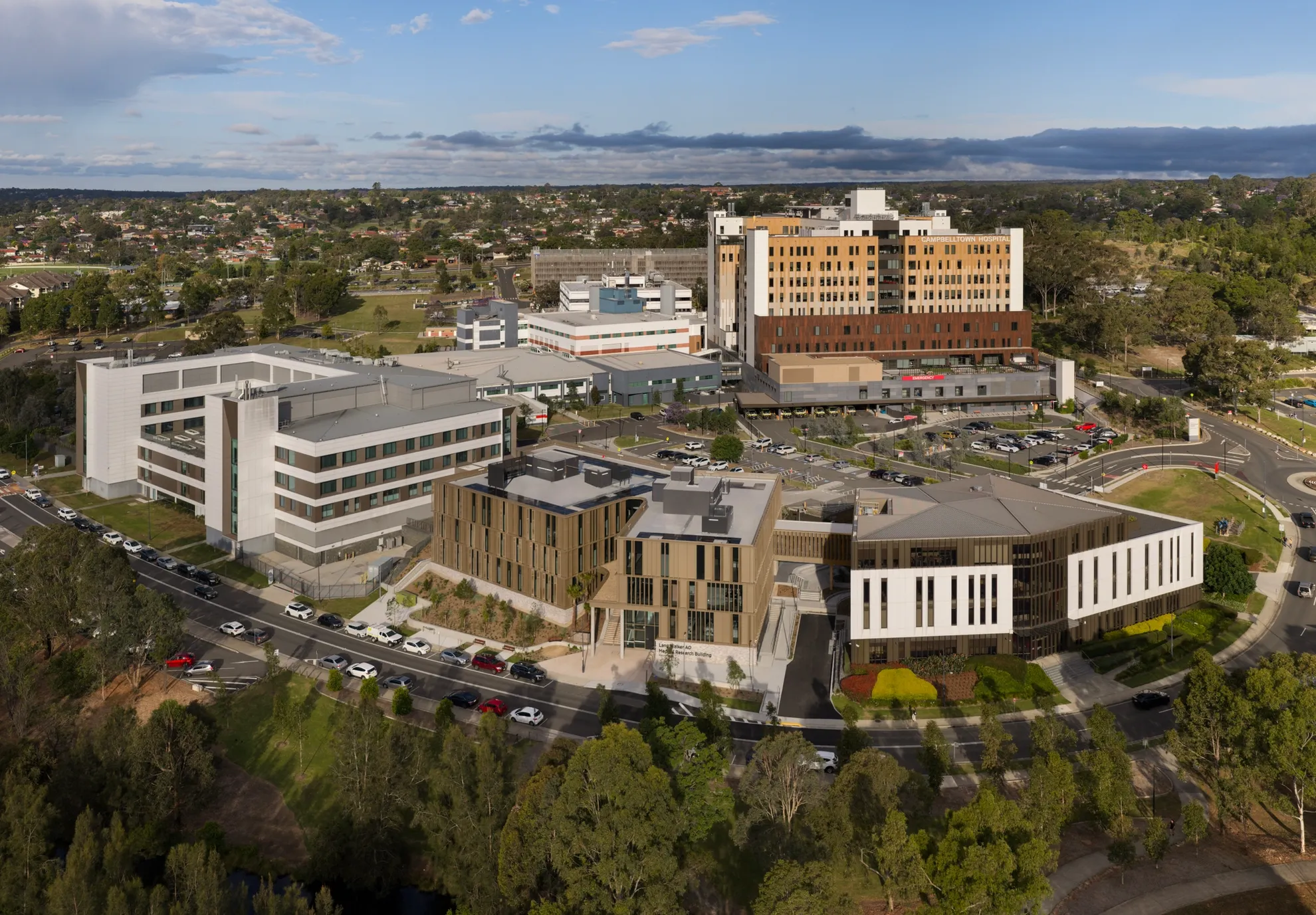
BVN’s design has used openness to subtly influence and nurture this core purpose. The building takes the form of two large rectangular boxes, slightly set apart and rotated, each one aligning with and linking to its neighbour, thereby supporting frequent movements between clinical, teaching and research activities. The central space created by this ‘gap’ is pivotal – providing the ability to walk through, to orient oneself to the wider hospital and to wait in comfort while viewing the gardens on both sides. It has become a meeting point for staff traversing the building and the campus.
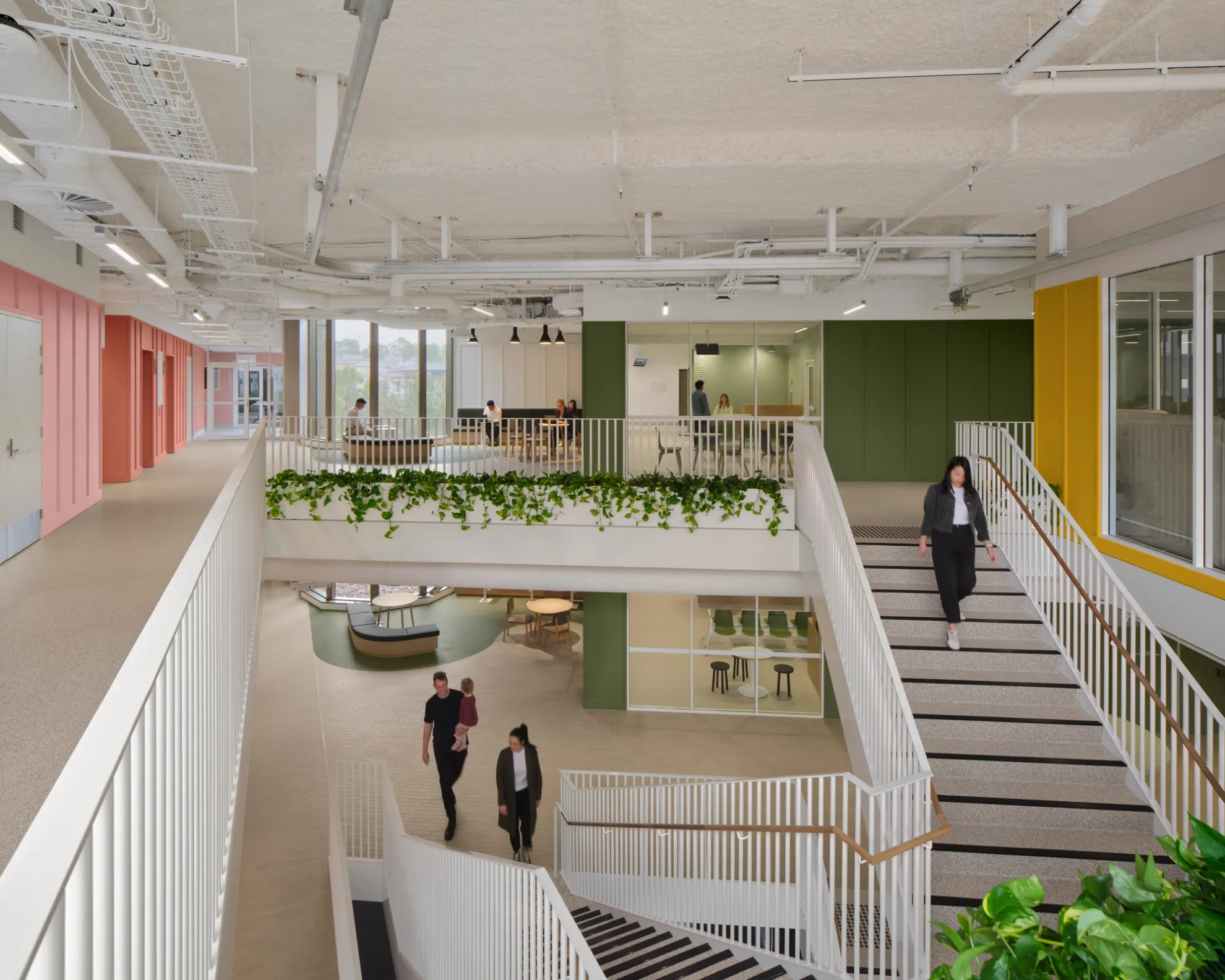
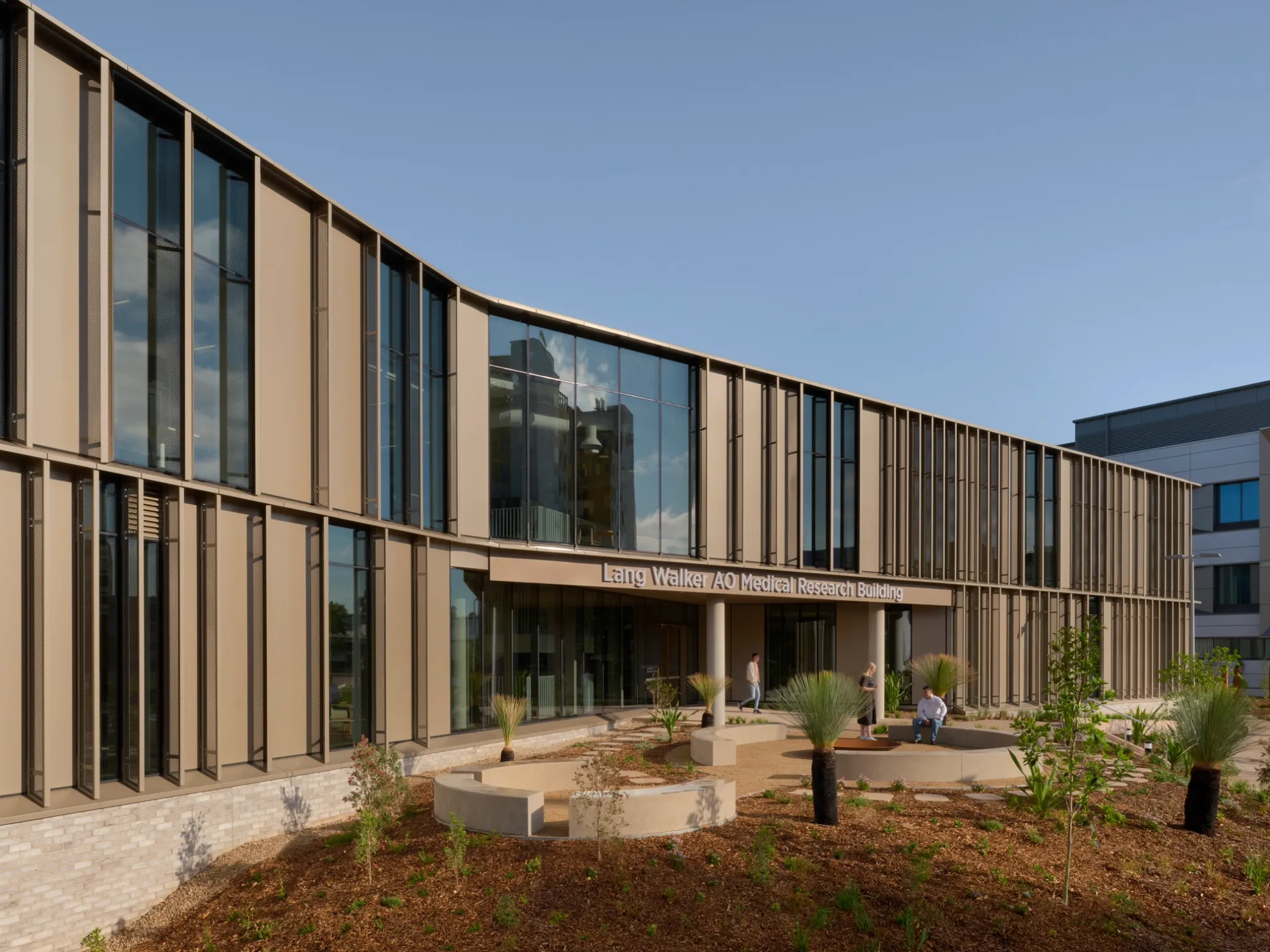
Embedding the LWMRB within the Campbelltown Hospital Campus conveniently collocates researchers and community members, facilitating connections and enabling a translational focus. To support this endeavour, the brief called for the building to be a connector on many levels – a place where clinicians and researchers can come together, where acute hospital activities are easily accessed, where the community can visit and participate in research and where collaboration stimulates inquiry and leads to innovation.
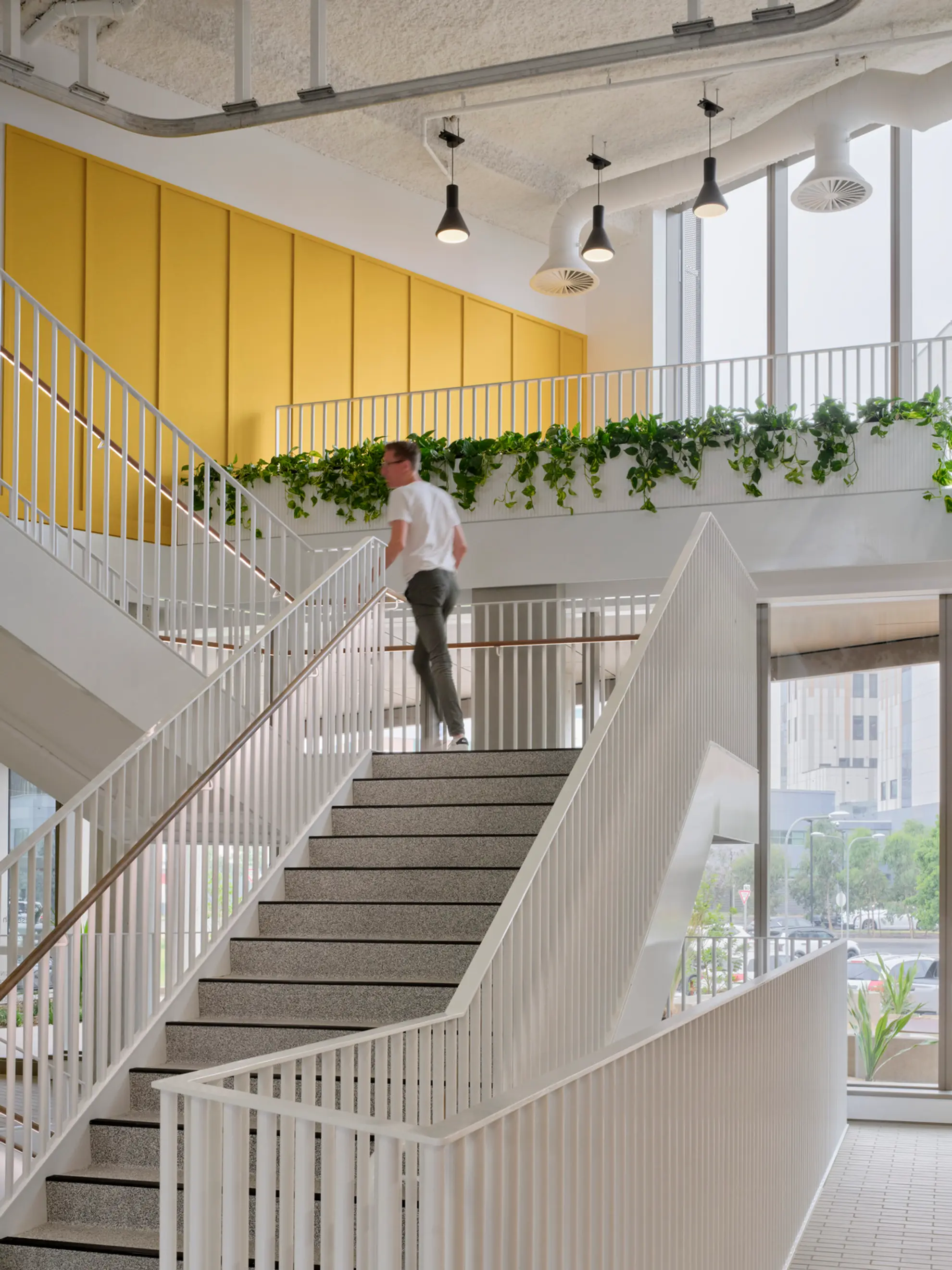
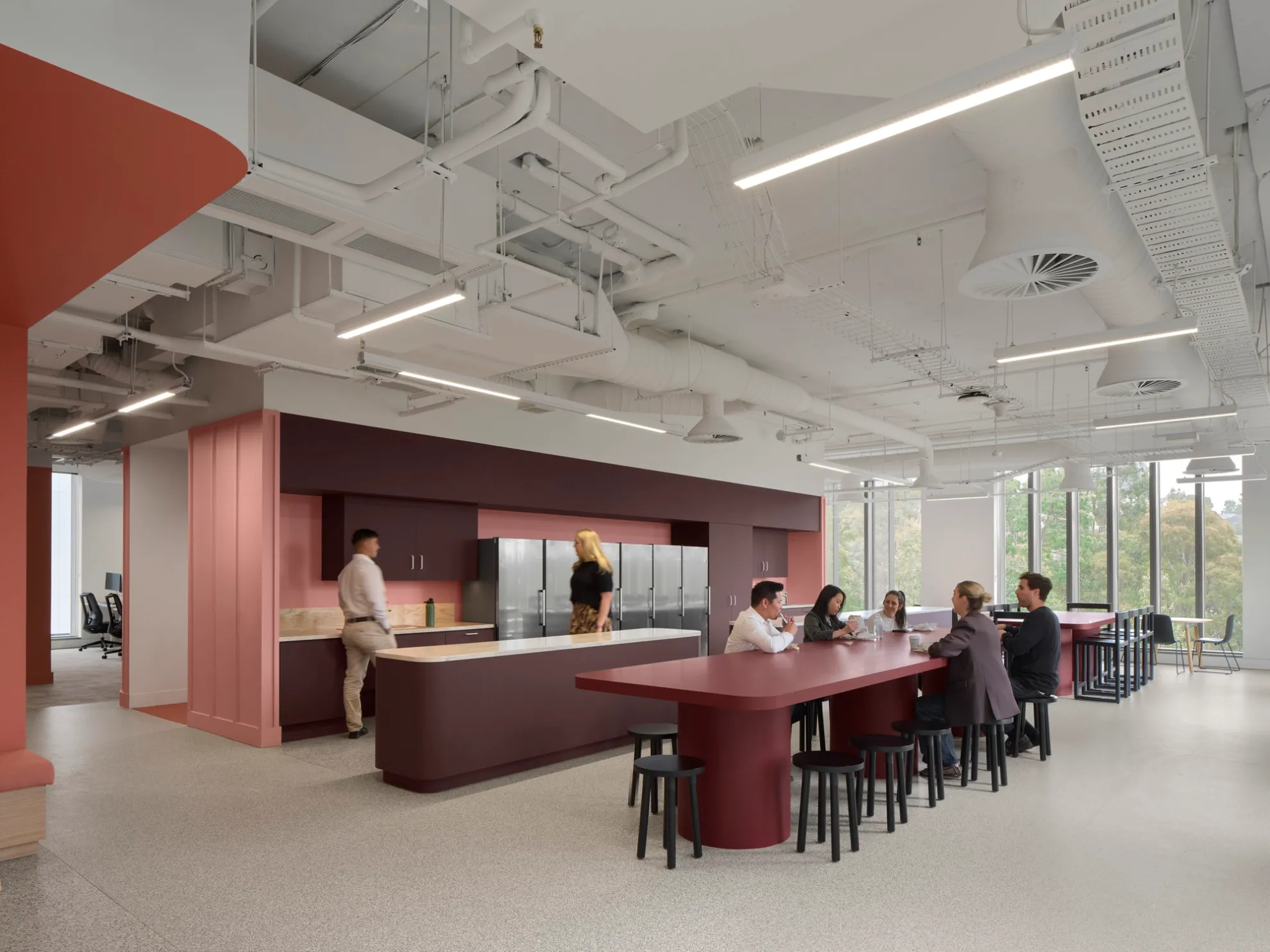
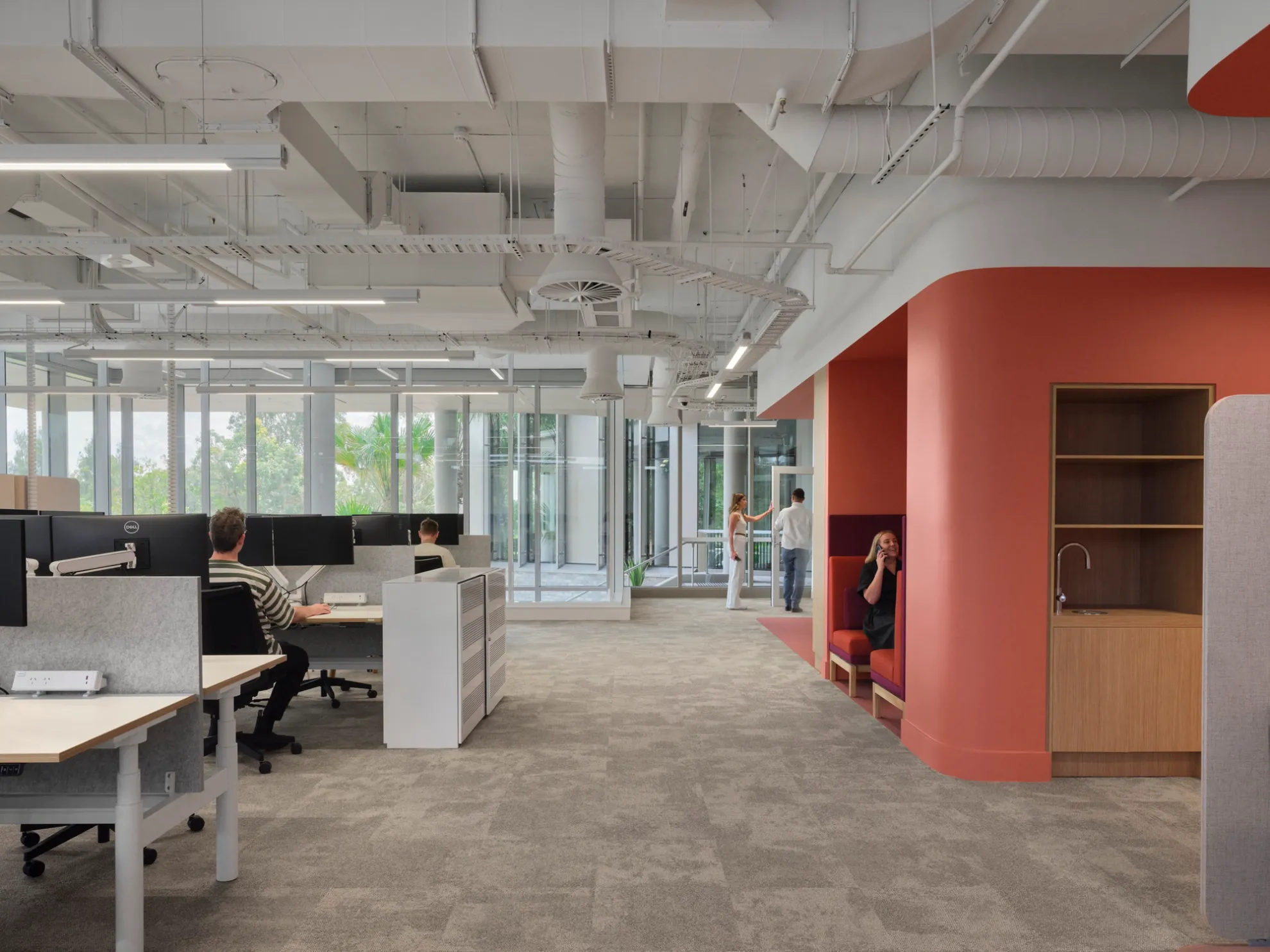
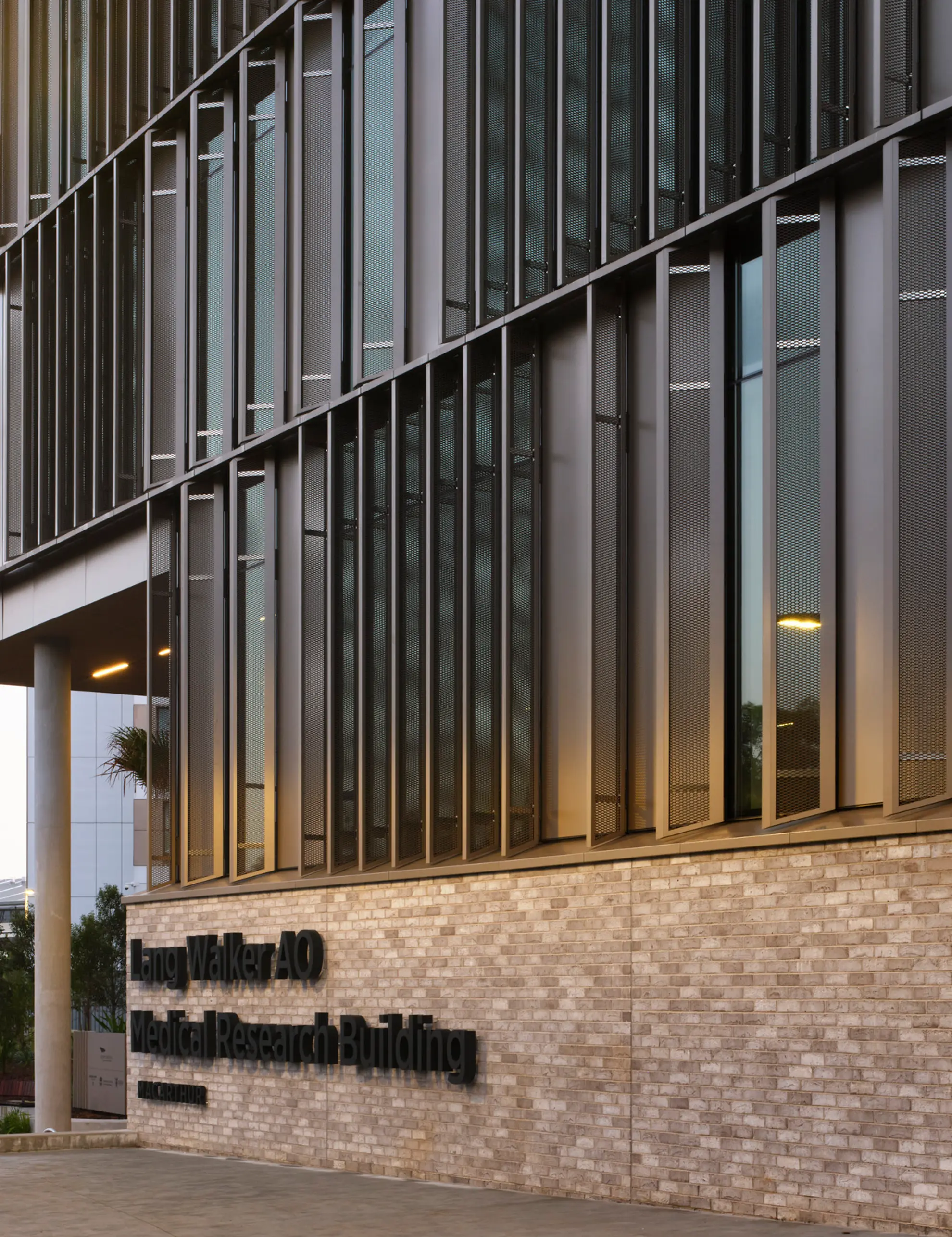
The architecture is intrinsically inviting and non-institutional. A simple curtain wall façade on a brick base using earthy tones, provides interest, depth and identity whilst aligning with the brief principle of “a people story not a building story”. A long stair provides a gentle transition into the building from Parkside Crescent, whereas the entry from the east is through the Village Green, both under generous overhanging roofs.
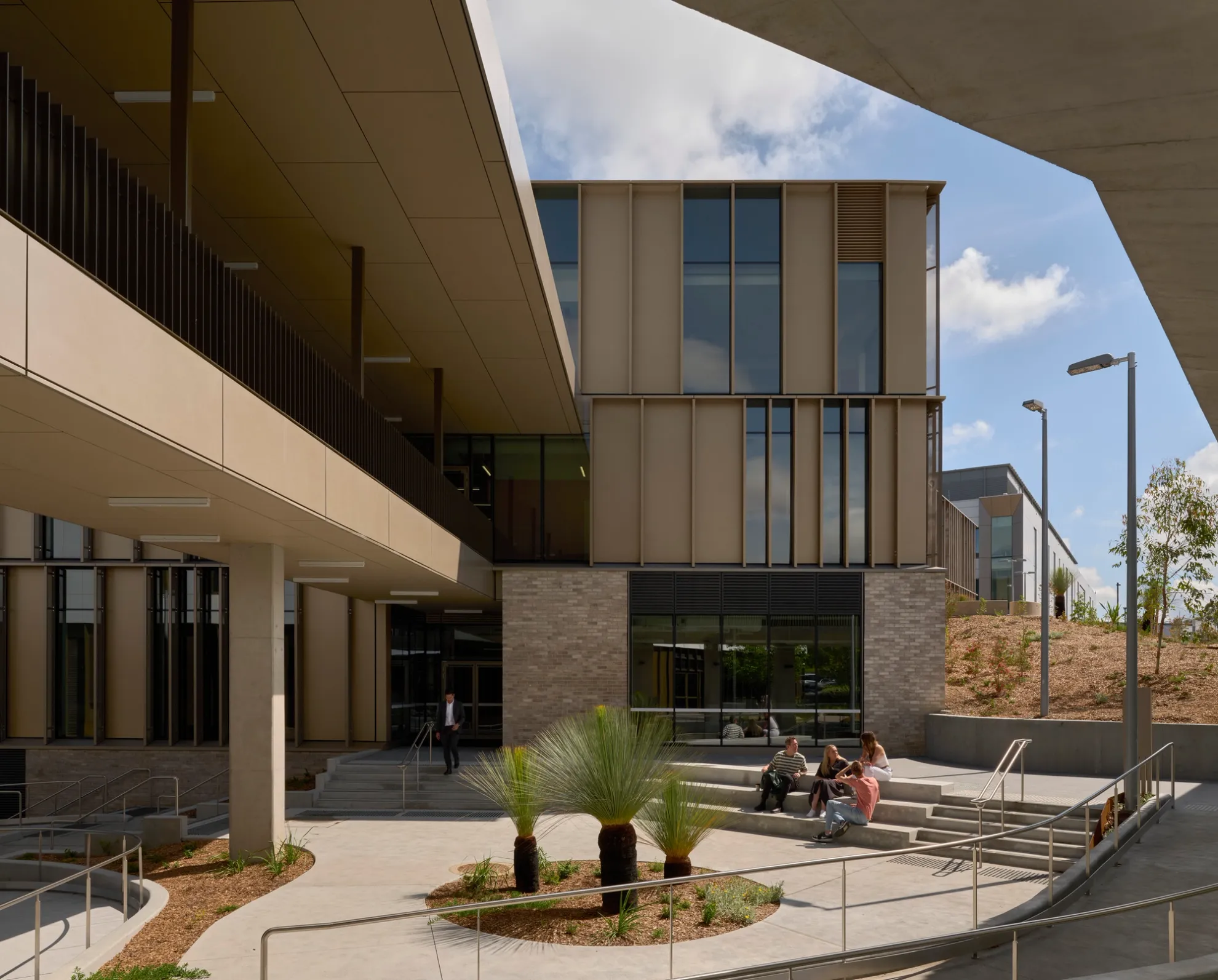
The suite of landscaped areas is completed by an extension of the Clinical School’s sunken forecourt which manages the transition between the two buildings at ground level.
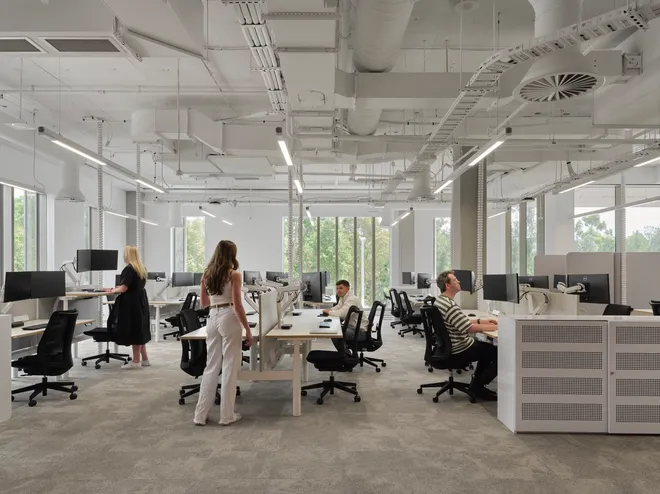
Reflecting the building’s core functionality, spaces are allocated to Dry Research, Clinical Research and Research Assessment spaces. These are supported by shared formal and informal collaborative areas that provide for public and community engagement. Combined use of shape, texture and colour makes occupation of the interior spaces a joyful experience - dynamic and light-filled, supporting relaxed engagement between research participants.
BVN has worked with a large stakeholder group to design a building that will generate genuine community benefit. It attracts the best minds in medical research to South Western Sydney by removing barriers to engagement through its welcoming and flexible research environment.
Credits
BVN
Collaborators
Walker Corporation
Richard Crooks Constructions
Western Sydney University
Ingham Institute
Consultants
Biosis, Citizen Group, CPM Consulting Services, Dosel Australasia, Group DLA, LEHR Consultants Internationall, Parking & Traffic Consultants, RWDI, SCLSPEC, SLR Consulting, Taylor Thomson Whitting, TTW, Turf Design, WSP Australia
Collaborators
Walker Corporation
Richard Crooks Constructions
Western Sydney University
Ingham Institute
Consultants
Biosis, Citizen Group, CPM Consulting Services, Dosel Australasia, Group DLA, LEHR Consultants Internationall, Parking & Traffic Consultants, RWDI, SCLSPEC, SLR Consulting, Taylor Thomson Whitting, TTW, Turf Design, WSP Australia
Photography
Tom Roe
Video
Tom Roe